
Long Fermented Sourdough Cinnamon Rolls [Recipe]
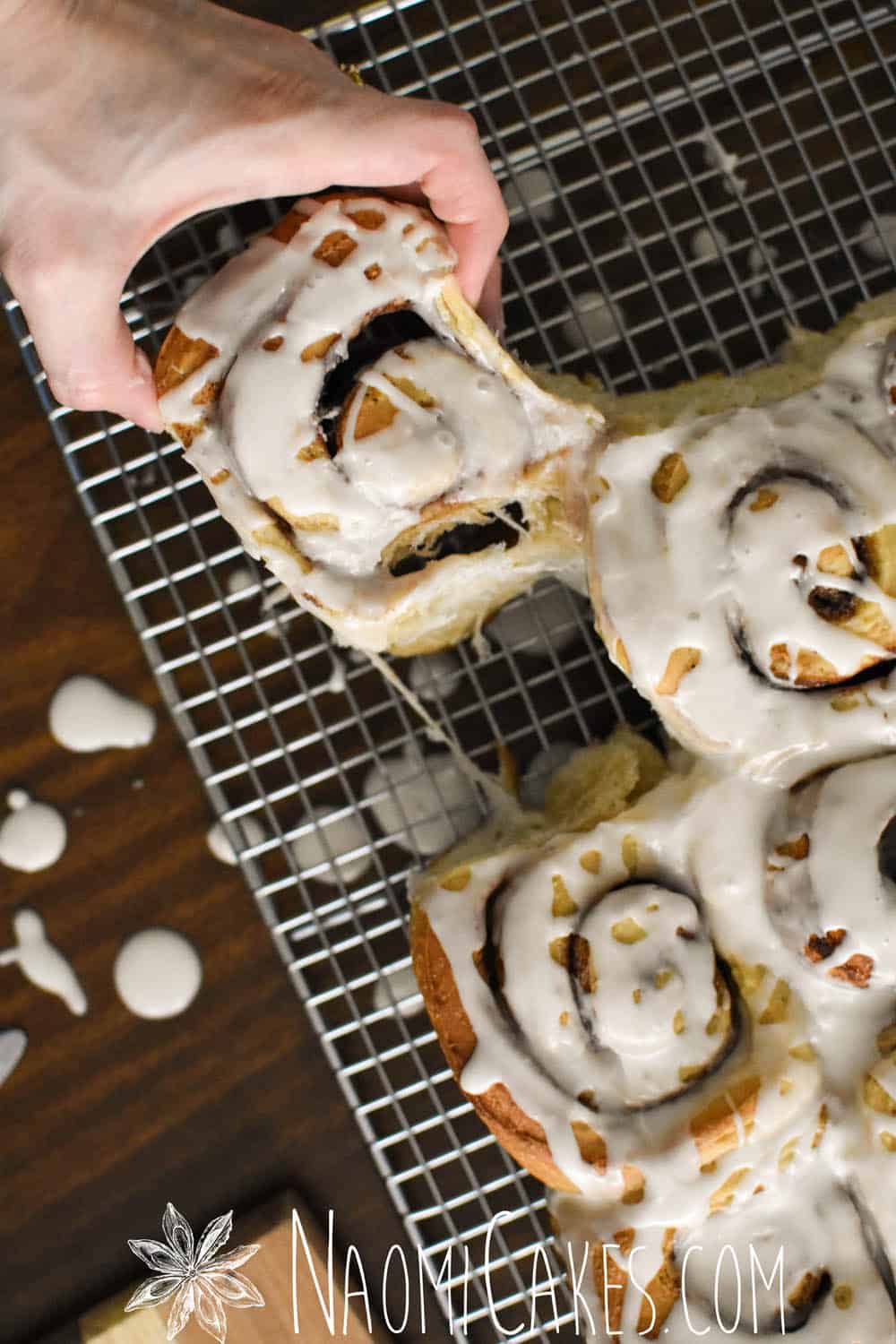
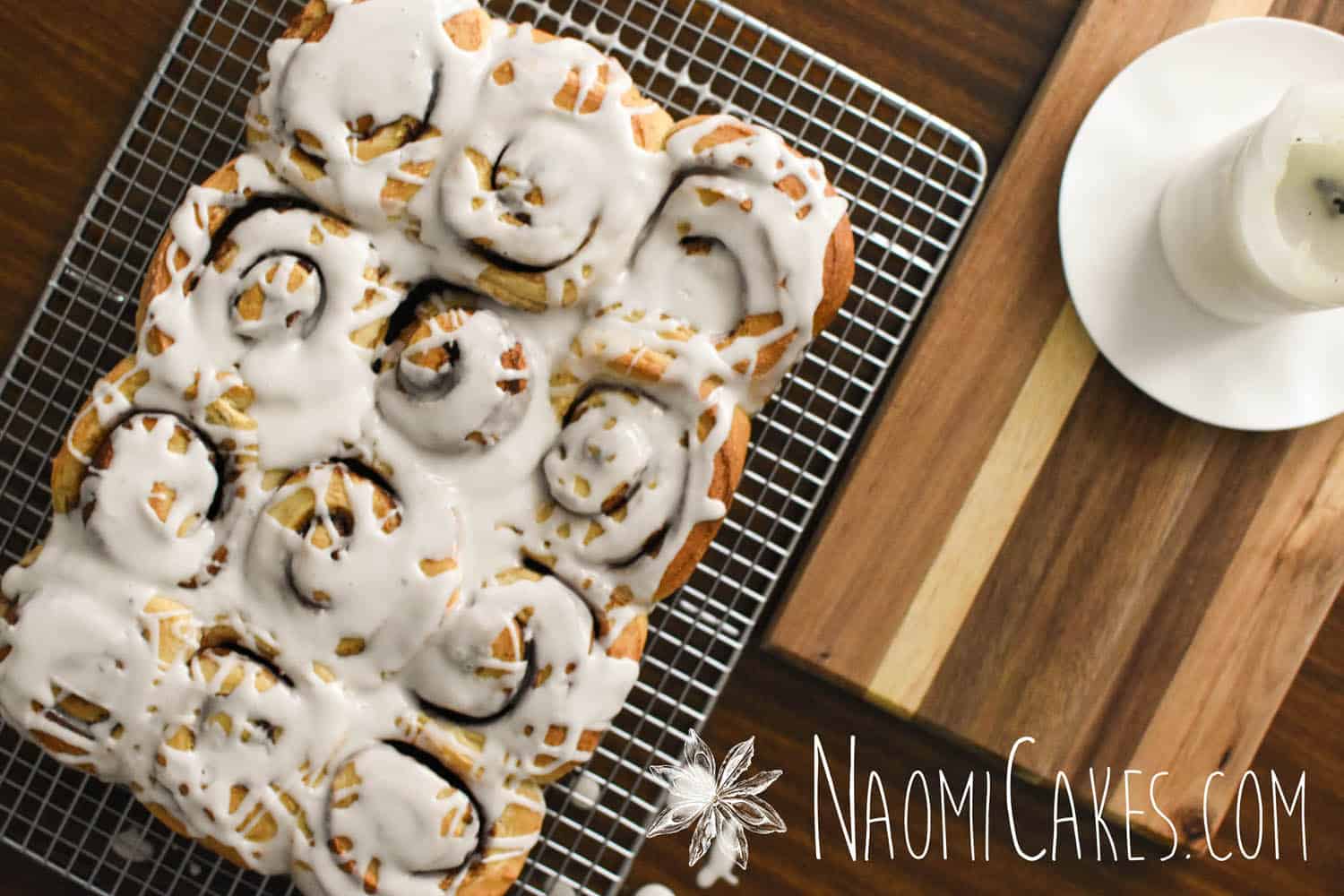
Ok guys, today I have a treat for you! I want to share with you an updated version of this old recipe for long fermented sourdough cinnamon rolls with sweet vanilla glaze.
I say “updated” not because the recipe has changed, but rather because I’ve realized (as my sourdough skills have increased) that this recipe would technically be considered a long-fermented recipe. So, I’ve changed the name to reflect that, and I’ll share a more typical sourdough cinnamon roll recipe with you in the days ahead!
What’s the difference between long fermented sourdough and regular sourdough?
It seems like sourdough is always “long fermented;” right? Well, yes and no. Once the dough has been made, most sourdough breads (such as my Easy No-Knead White Sourdough Bread) go through a “Bulk fermentation” phase, which is often between 3 hours (give or take, depending on the recipe). After that initial rise, the dough will then go for a slow ferment in the fridge overnight before you bake it.
Long fermented sourdough breads typically go through a much longer fermentation phase (in this recipe, 8-12 hours for the bulk ferment). This period of time allows the fermentation process to break down the dough much further, making the dough easier to digest (source) and creating that classic “tangy” sourdough flavor.
The main reason to do a longer bulk ferment is for the added benefit to your health, and of course, if you love that sourdough taste.
Sourdough vs. yeast breads
If you’re not familiar with sourdough baking, the main difference is the yeast you use to rise your bread, and the way that it behaves.
In North America, we primarily have been used to eating yeast bread, made with quick-rising yeasts, which don’t allow the bread the time it needs to break down those harder to digest qualities in flour (but which makes the process extremely fast).
For sourdough bread baking, you need to use a wild yeast or “Sourdough starter” as your rising agent, which is a much older and more traditional method of bread (but which takes much longer). This process allows the bread to ferment and break down some of the harder to digest qualities in flour (such as gluten).
While sourdough bread is not gluten free, it can be easier for some people with gluten sensitivities to process (source).
How to make your own sourdough starter
If you want to learn more about sourdough starter, how it works, and how to make your own, you can check out my easy tutorial Here, or go ahead and purchase a starter culture to get one going quickly and easily.
In this specific recipe, I used a whole wheat sourdough starter as my starter culture (which is why the dough has a more brown appearance).

Toppings and fillings for this recipe
In this recipe, I’ve chosen to make a simple sweet vanilla glaze for the topping, but you can quite easily substitute that for any other of your favorite frostings or cinnamon bun toppings (my personal favorite is cream cheese frosting, as in this recipe).
You can also add any of the following to the filling to make your rolls more special:
- Raisins
- Dried currants
- Walnuts
- Pecans
- Almonds
- Other nuts
- Apple pieces
- Chocolate (chocolate chips or grated chocolate)
Sourdough cinnamon roll ingredients
These are the ingredients you need to make this recipe!
water
Water is the backbone of this recipe, which is what makes the dough take on its texture. If you want your dough a little softer, you can use 1/2 milk for this recipe as well.
sourdough starter
You will need a healthy, active starter culture in order for this recipe to work. Check out my sourdough starter tutorial to learn how to make your own!
salt
Salt is an essential ingredient in just about every type of dough. It adds an essential flavor component that would definitely be missed without it, and also can contrast the sweetness of doughs with sugar added perfectly.
brown sugar
You can use brown or white sugar for this recipe, but I prefer to use brown sugar for its caramely flavor and beautiful, rich color.
egg
Egg makes the dough richer and softer, which is perfect for cinnamon rolls. If you need to leave the egg out, substitute it for an additional 1/4 cup of milk or water.
butter
The “secret sauce” of baking, in my opinion, is real butter. You can use salted or unsalted butter for this recipe, but honestly, my preference is to use salted butter.
white flour
I use simple, unbleached all purpose flour for most of my baking. You can also use organic white flour or bread flour for this recipe.
oat flour
Oat flour, or ground oats, is a lovely addition to this recipe, giving it another dimension to the finished flavor. If you’re making your own oat flour, you can try grinding your oats in a coffee grinder (or food processor), and make it a little bit coarse for some added texture.
Baking by volume vs. baking by weight
I confess, I grew up in a world of measuring cups, and the idea of using a baking scale (for whatever reason), was incredibly intimidating to me.
Fast forward a bunch of years, and I tell you what: it’s not hard (in fact, it’s easier), and it’s way more accurate. If you’ve struggled with getting your baking to turn out, honestly, baking by weight could be the thing that changes your life!
Here’s one of the reasons why: Flour, for example, settles as it sits and becomes more dense in its container. That said, if you’re someone who spoons the flour into the measuring cup, then you’ll end up with a lighter weight of flour than someone who scoops the compacted flour out directly. Flour, depending on how you scoop it, can weigh anywhere from 100-170 grams!
For sourdough baking, using weight as your way of measuring is one of the best ways to make sure your recipe turns out right.
You will need:
- Ingredients (see recipe card)
- Kitchen scale (optional)
- Large mixing bowl (or stand mixer)
- Large stir spoon or spatula
- Measuring cups and spoons
- Rolling pin
- Bench scraper
- Butter knife
- Sharp knife
- 9×13 baking dish
- Plastic wrap
Long Fermented Sourdough Cinnamon Rolls
Delicious, soft cinnamon rolls made with you very own sourdough starter.
Ingredients
- 1-1/3 c. (325ml) warm water
- 2/3 c. (150g) active sourdough starter* *see notes
- 1 tsp (5ml) salt
- 1/2 c. (100g) brown sugar
- 1 lrg egg
- 1/4 c. (57g) butter softened
- 4-1/3 c. (625g) white flour
- 1/3 c. (50g) oat flour (oat flour = ground oats)
Filling
- 1/4 c. (57g) butter softened
- 1/2 c. (100g) brown sugar (approx)
- 1 Tbsp (15ml) cinnamon (approx)
Vanilla Glaze
- 2 cups (300g) icing sugar
- 1/2 tsp (5ml) vanilla extract
- 3 Tbsp (45ml) cream (or milk)
Instructions
-
In the bowl of an electric stand mixer, combine the first 8 ingredients. Mix on low-med speed with the dough hook for 10 minutes. Turn into a greased mixing bowl, cover with plastic, and allow to rise at cool room temperature overnight. (If you don't have a mixer, knead by hand until smooth and elastic, about 10-15 minutes.)
-
Turn the dough out onto a lightly floured work surface, press into a rectangle shape, and roll out into a 10×15" rectangle (about 1/4" thick). No need to "punch the dough down" – pressing and rolling it into shape will do that for you!)
-
Spread 1/4 cup of softened butter over the surface of the dough, leaving a little lip on the side farthest from you without butter (this will be where you seal the dough after rolling it up, and you want that to remain sticky). Make sure to spread butter well to all of the edges except for the far edge, as mentioned before.
-
Sprinkle brown sugar over the surface of the dough. Use your fingertips to spread or "massage" the sugar into the butter, spreading it evenly over the surface and right to the edge of the dough, except on the side farthest from you, as mentioned above.
-
Generously sprinkle cinnamon (again, using more or less than suggested above depending) over the whole butter/sugar covered area on the dough.
-
Start with the side closest to you, and roll the dough into a jelly roll shape, pinching the last edge to the roll to seal it. Place the roll seam-side down, and cut it into 12 equal sized pieces (about 1" wide each), and lay into a greased 9×13" baking dish (cut side up). Cover and allow to rise 2-3 hours in a warm place, or until doubled.
-
Preheat the oven to 350 degrees F. When the oven has come to temperature, bake the rolls for 30-40 minutes or until golden brown. Turn out onto wire rack to cool immediately.
For the Glaze:
-
Combine all glaze ingredients in a bowl; stir until smooth and combined. Drizzle or spread over baked cinnamon rolls.
Recipe Notes
- To learn how to make your own sourdough starter, click Here.
- To prevent the rolls from rising too much in the middle when they bake, try rolling your “jelly roll” loosely at first, and gradually make it tighter as you go.
How to Make Long Fermented Sourdough Cinnamon Rolls
Make the dough
In the bowl of an electric stand mixer, combine the first 8 ingredients. Mix on low-med speed with the dough hook for 10 minutes. Turn into a greased mixing bowl, cover with plastic, and allow to rise at cool room temperature overnight. (If you don’t have a mixer, knead by hand until smooth and elastic, about 10-15 minutes.)
Roll into a rectangle
Turn the dough out onto a lightly floured work surface, press into a rectangle shape, and roll out into a 10×15″ rectangle (about 1/4″ thick). No need to “punch the dough down” – pressing and rolling it into shape will do that for you!)
Spread with filling
Spread 1/4 cup of softened butter over the surface of the dough, leaving a little lip on the side farthest from you without butter (this will be where you seal the dough after rolling it up, and you want that to remain sticky). Make sure to spread butter well to all of the edges except for the far edge, as mentioned before.
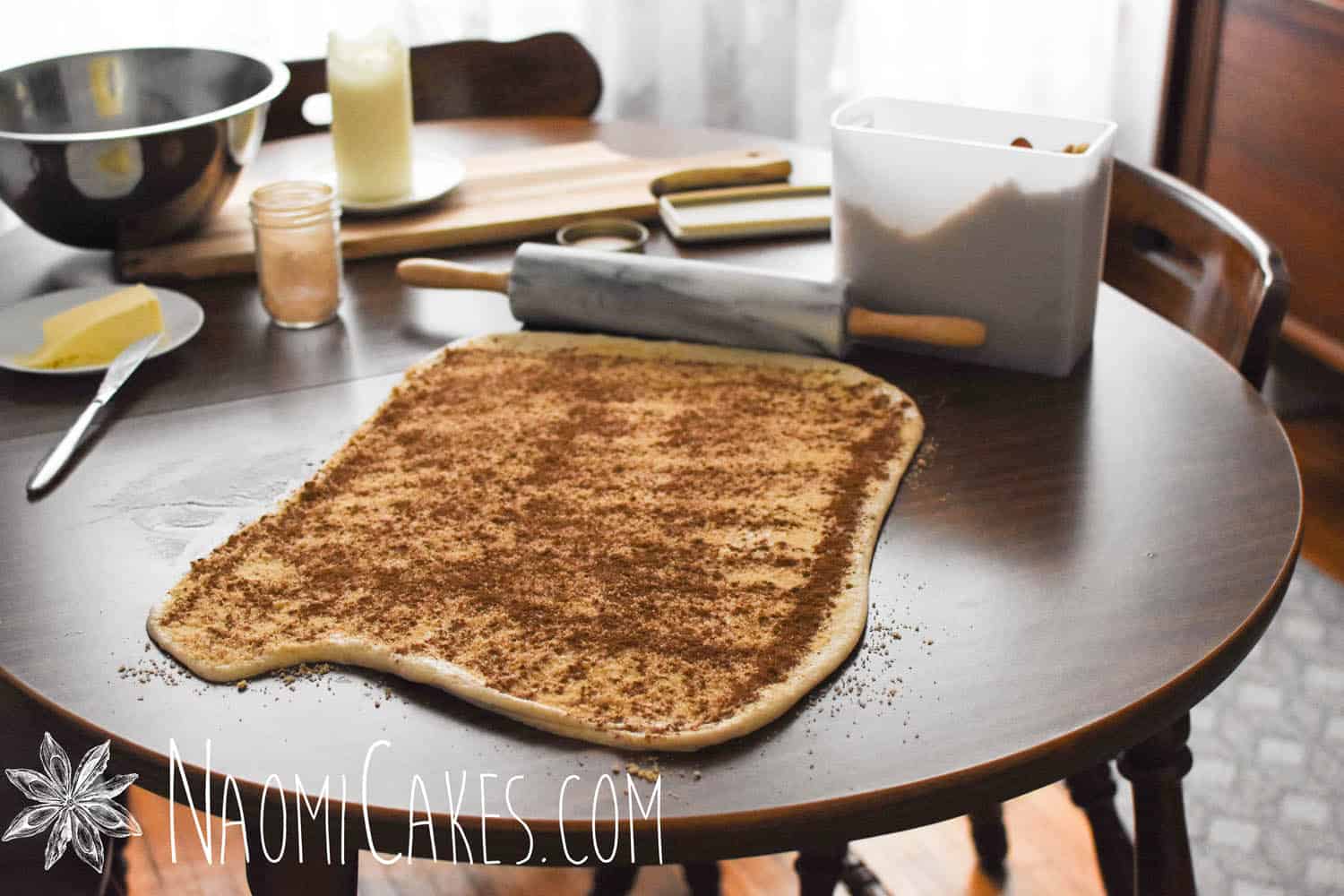
Sprinkle brown sugar over the surface of the dough. Use your fingertips to spread or “massage” the sugar into the butter, spreading it evenly over the surface and right to the edge of the dough, except on the side farthest from you, as mentioned above.
Generously sprinkle cinnamon (again, using more or less than suggested above depending) over the whole butter/sugar covered area on the dough.
Make the rolls
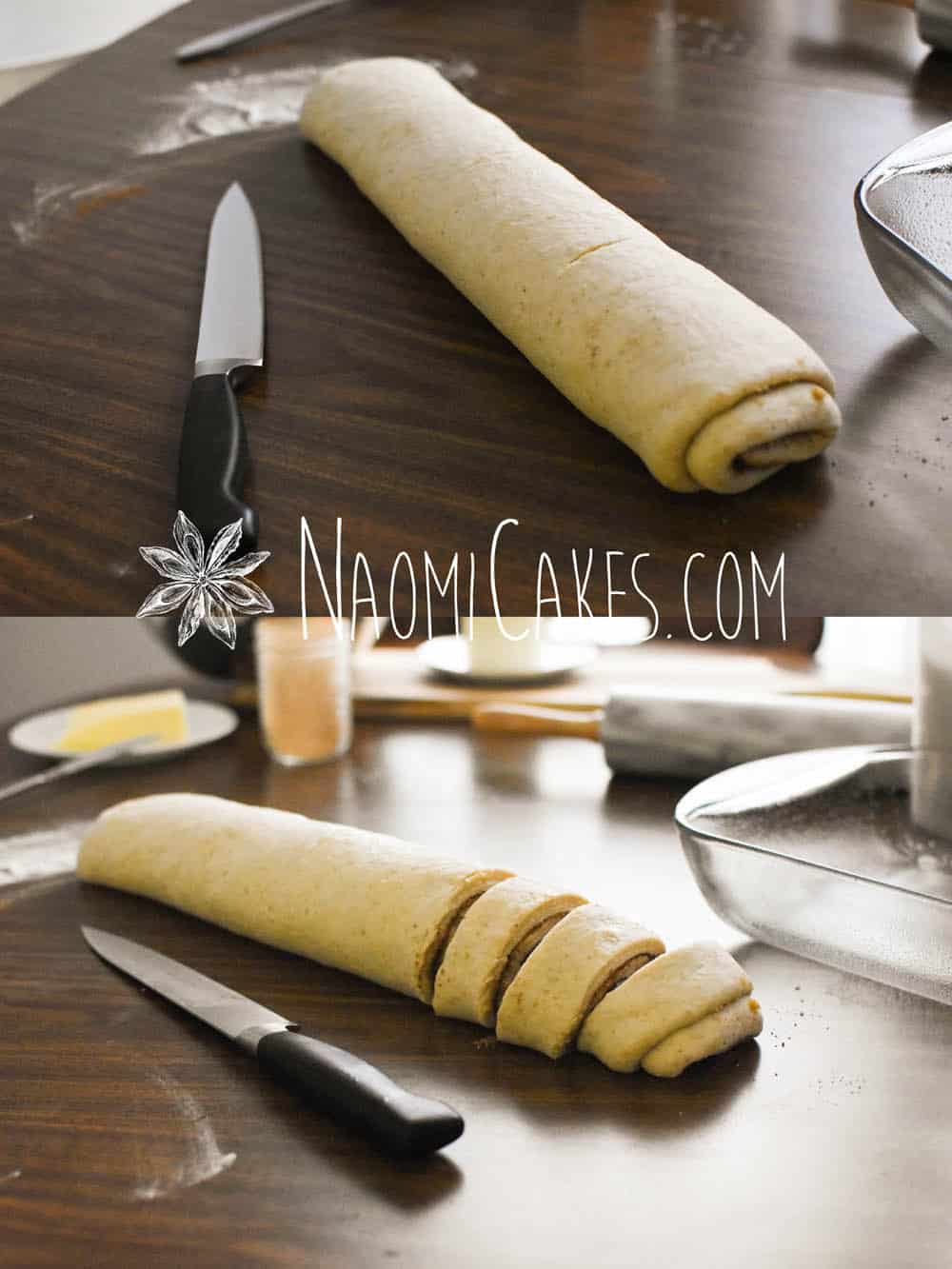
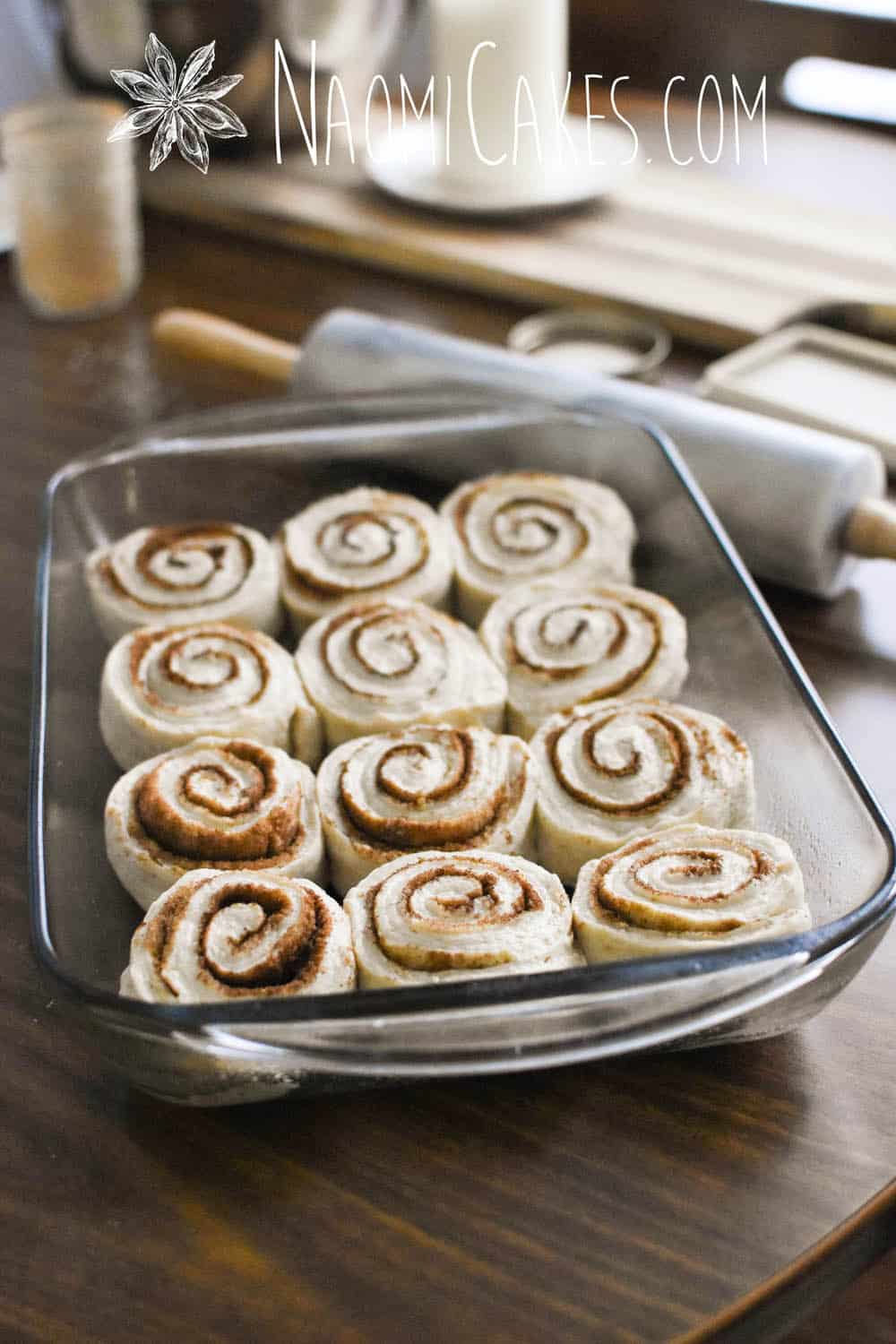
Start with the side closest to you, and roll the dough into a jelly roll shape, pinching the last edge to the roll to seal it. Place the roll seam-side down, and cut it into 12 equal sized pieces (about 1″ wide each), and lay into a greased 9×13″ baking dish (cut side up). Cover and allow to rise 2-3 hours in a warm place, or until doubled.

Bake
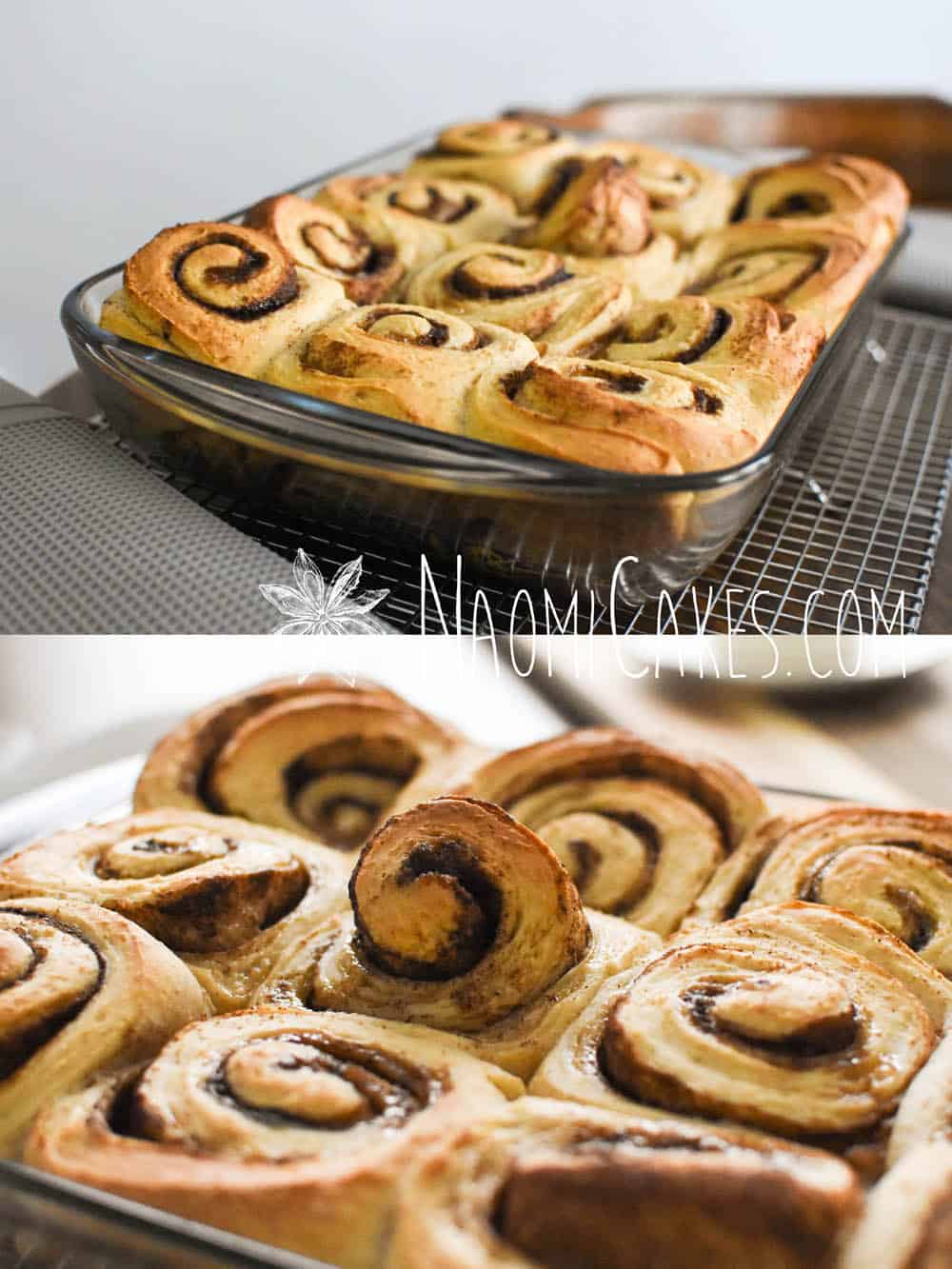
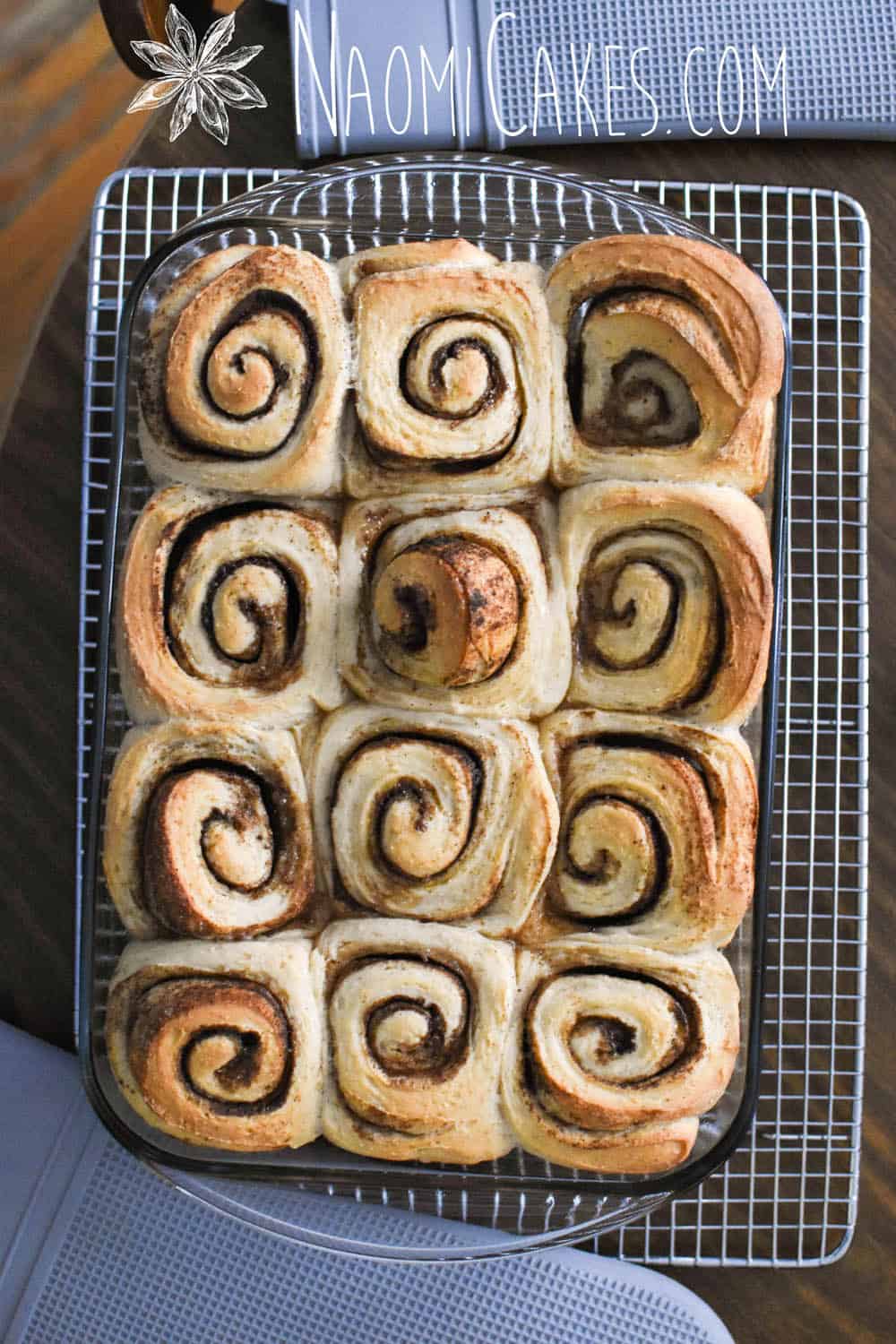
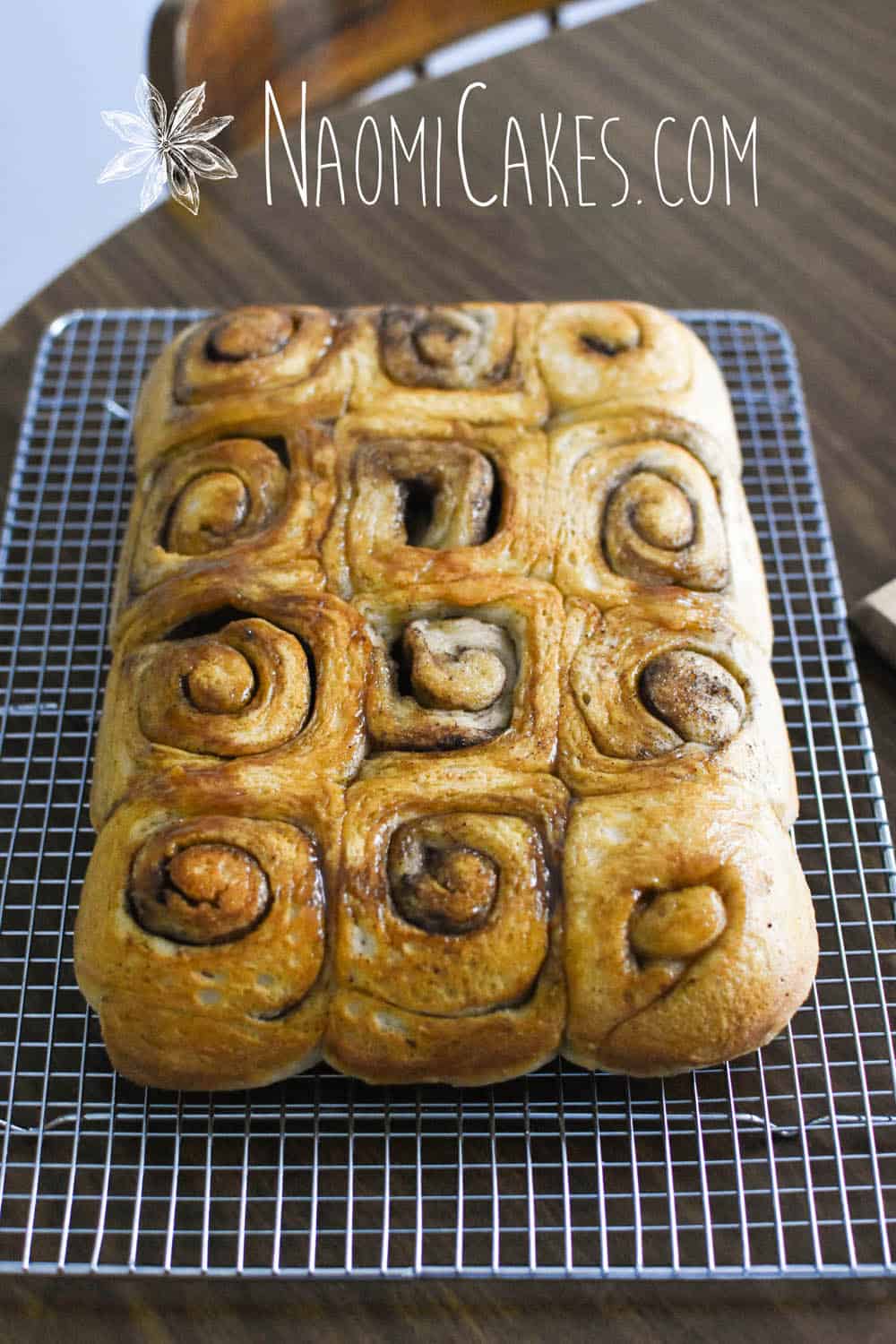
Preheat the oven to 350 degrees F. When the oven has come to temperature, bake the rolls for 30-40 minutes or until golden brown. Turn out onto wire rack to cool immediately.
Add the glaze
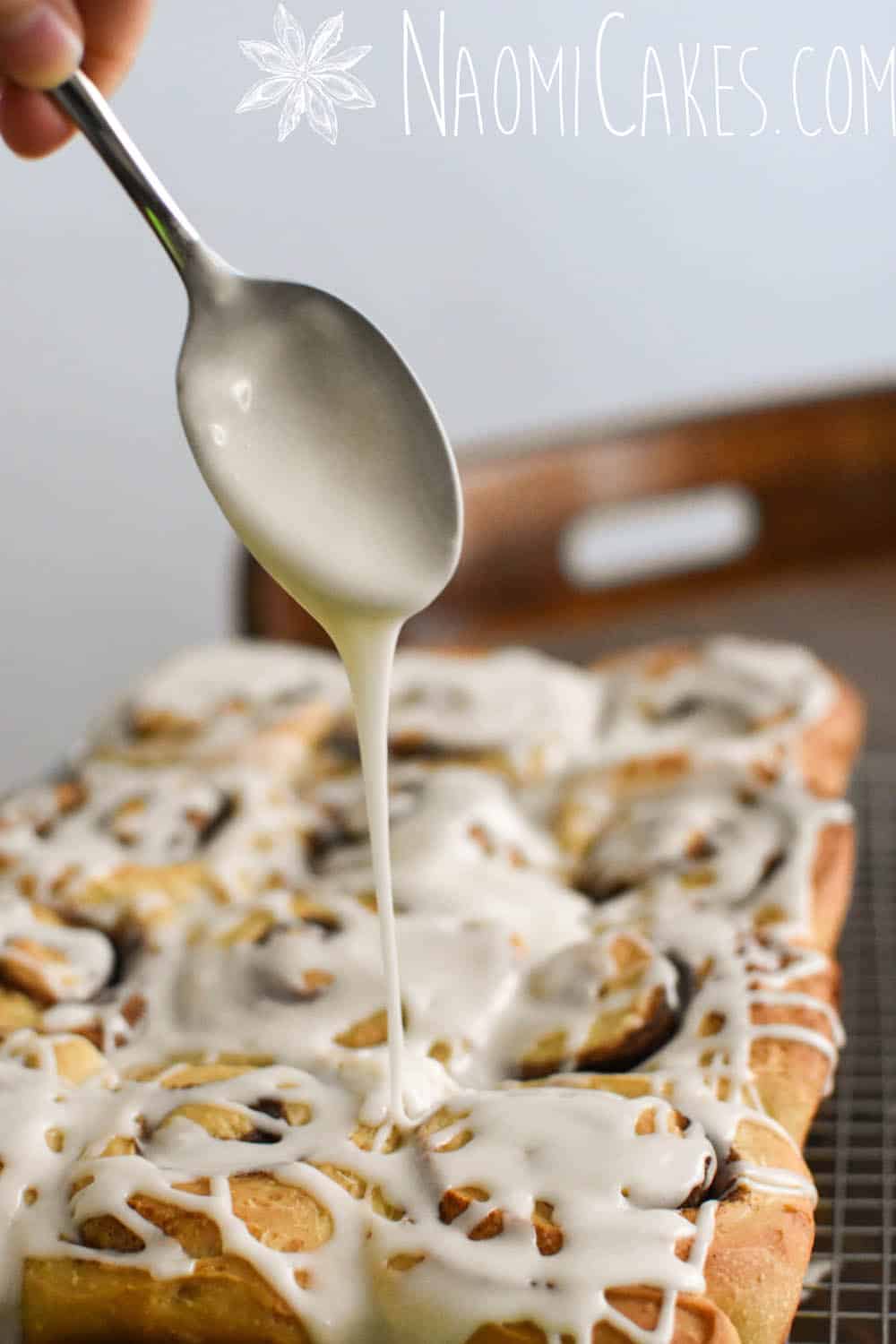
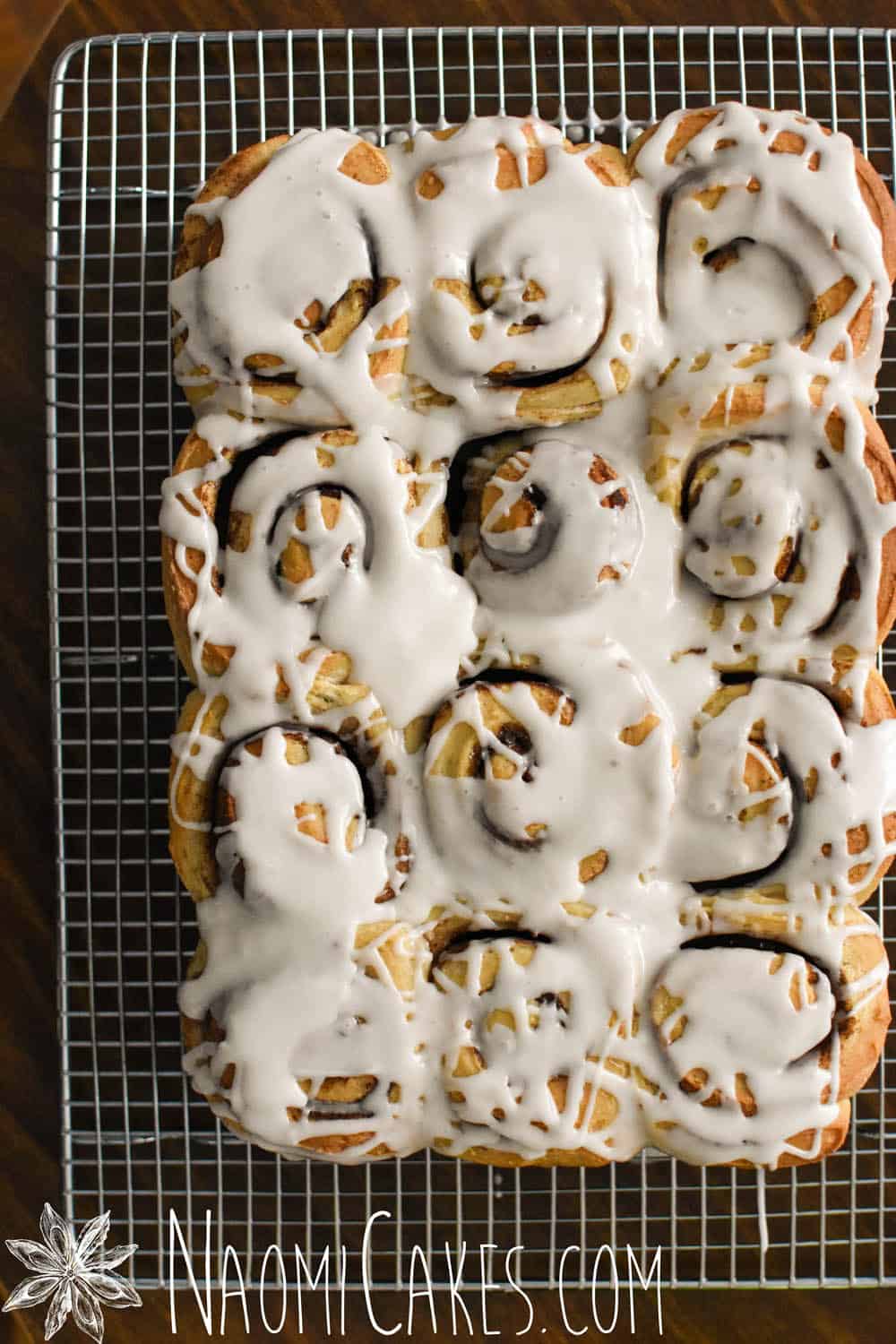
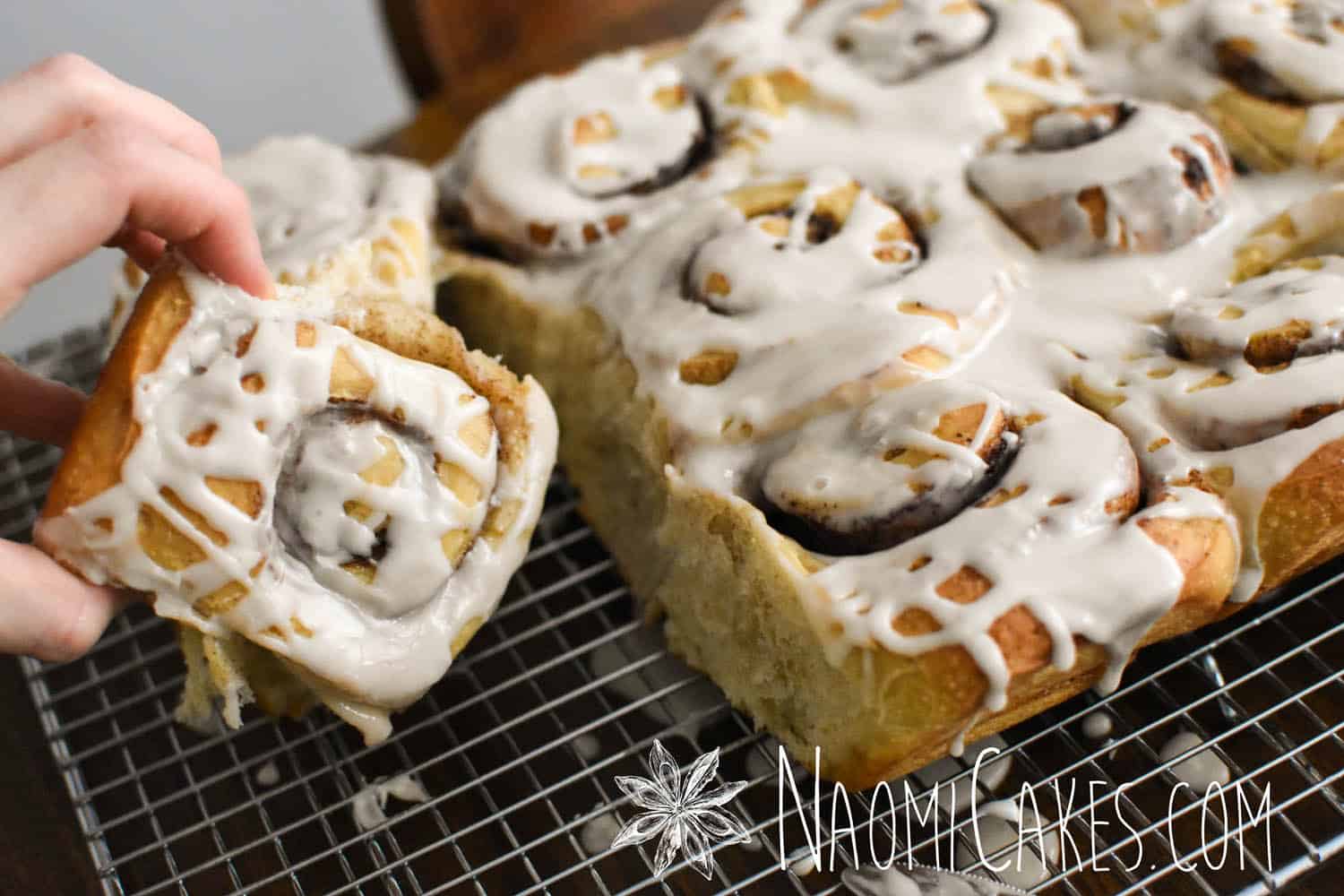
Combine all glaze ingredients in a bowl; stir until smooth and combined. Drizzle or spread over baked cinnamon rolls.
If you like this recipe, you may also like:
- Easy No-Knead White Sourdough Bread
- Sourdough Cinnamon Raisin Bagels
- Simple Sourdough Crêpes
- Honey Whole Wheat Sourdough Bread
That’s it for today! As always, if you make these, let me know how they turned out! You can tag me in your photos on Facebook or Instagram .
Cheers! I’ll be back soon.
Naomi
This post contains affiliate links.

